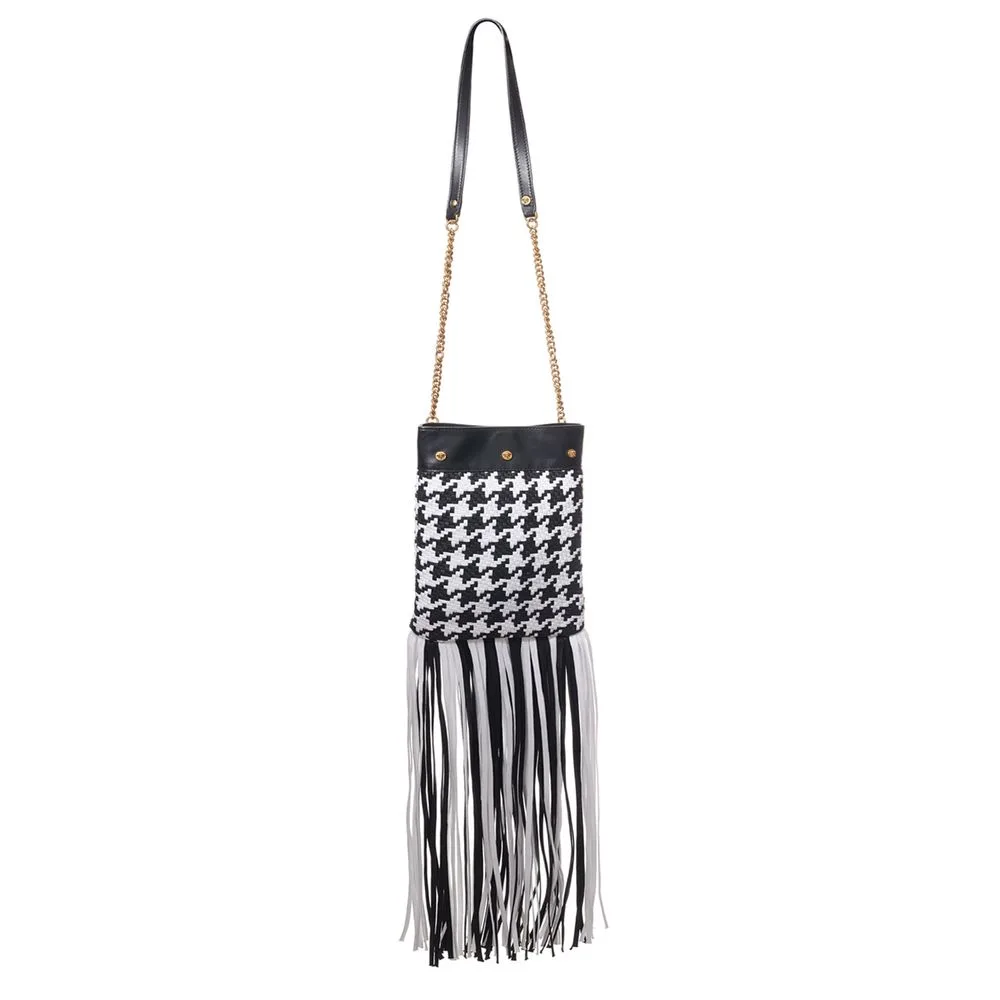
Most of what a bag costs is not the leather. It is the cutting, the skiving, the stitching and the hardware — the work that decides whether the thing holds its shape when it is full and whether it survives being set down on the floor twice a day for a decade.
Four things tell you nearly everything, and you can check all of them in under a minute.
1. The edges
Look at the cut edge of a strap or a flap. On a well-made bag it is burnished or painted in several thin coats, smooth to the touch and the same depth of colour along its whole length. On a cheap one it is a single thick coat that has already begun to chip, or a raw edge folded over and glued. Edges are slow, skilled work, and they are the first place a maker cuts cost.
2. The stitching
Count the stitches across a centimetre: more, and more even, is better. The line should be straight, the tension the same throughout, and the thread should sit in a channel rather than on top of the leather. Look especially at the points that take the load — where a handle meets the body, where a strap meets a ring. Those should be reinforced, usually with a backstitch or a rivet.
3. The hardware
Pick the bag up by the handle and feel the weight of the clasps. Solid brass is heavy and warm; plated zinc is light and cold, and the plating wears through at the corners within a year or two. Open and close every zip twice. A good zip moves without catching and feels the same at both ends of its run.
Hardware is also the part that cannot usually be replaced. A lining can be repaired and leather can be fed; a broken cast clasp often ends the bag.
4. The lining and the structure
Reach inside and feel for the seams. A good lining is stitched in, not glued, and you can feel a clean seam rather than a ridge of adhesive. Suede and cotton twill both wear well; thin polyester tears at the corners of pockets.
Then set the empty bag down. If it collapses completely, it has no internal structure, and it will sag permanently once it has carried weight for a season. Some bags are designed to be soft, and that is a choice — but a structured bag that slumps when empty was built to look good in a photograph.
What is not a fault
Grain variation, small natural marks and slight colour differences between panels come from the hide and are a sign the leather has not been heavily corrected. A full-grain bag will darken unevenly where your hands touch it. That is the part people pay for twenty years later.
Where the money actually goes
Between two bags at the same price, the one with better edges, denser stitching and heavier hardware is almost always the better buy, whatever is printed inside it. Those three things cost real labour, and no amount of marketing substitutes for them.